
| Sri Lanka - fear and trauma, one year on |
|
| News and Features |

By Nina de la Preugne
The flow of words stopped suddenly and her voice was replaced by quiet sobs. The thought of her son, who went missing around November in the infamous Manik Farm ‘displacement camp’, always raises uncontrollable emotions in Pavitra. Until a few months ago, she was not too worried. She thought they would be reunited as they left the camp.
But back in the Vanni area of northern Sri Lanka, the gravity of the situation hit her. “I think I will never see him again. Like my dead nephew.”
Sashi, 25, is another mother struggling with the consequences of the conflict: “I lost my foot and fingers due to the shelling. It is only in January that I received proper treatment for my injuries, in the Vavunyia hospital. My husband was inside the LTTE controlled area and to protect himself from being forcefully enrolled by the LTTE, he got married to someone else. I don’t know where he is and I have to take care of my three children by myself”.
In the psychiatric department of the general hospital in the northern city of Jaffna, the number of patients has started to increase exponentially, mirroring a mindset that has shifted from relief at the end of Sri Lanka’s civil war, to hopelessness.
“Over the years, there had been an escalation of violence. Little by little we learnt to deal with worse situations, to deal with displacements, murders and so on. People just had to deal with the present situation, it’s the instinct of survival – it does not leave space for understanding but just for action,” said a doctor at the hospital.
“My husband had two motorbikes, a board engine, a net and his own shop. Now we are starting from zero. We have no money, no equipment to go fishing, no livelihood and no one to help us,” said a 50-year-old woman in Vanni. “There are many cases of mental disorders in the area. Many men have started to drink. We used to have families, houses, properties... When I think about that it makes me cry.”
Her husband described symptoms of acute stress disorder, a serious condition that can lead to Post-Traumatic Stress Disorder: “When I see dead bodies I get faint and often fall unconscious. I also get a pain on my side and it almost paralyses me.”
Such cases of acute stress reaction or disorder have multiplied in the last two months according to local doctors, but the means to handle the situation are severely restricted.
“There are only two psychiatrists for the entire Jaffna and Vanni area, it is not enough and this will affect the future of the area because people will not be able to move on,” said the doctor at Jaffna general hospital.
A NGO worker agreed that little had been done to meet the psycho-social needs of the displaced population: “I am not sure the government recognises the importance of the situation. There is a lot of grief, of anger too. NGOs and aid agencies underestimated the issue as well.”
The consequences of having such an affected student population are often difficult to manage for the academic staff, and cases of suicides and violence are widespread. Disabled students, war widows, orphans, and displaced students have to be accommodated one way or another by the university but resources, adequate infrastructure and staff numbers are lacking. They have not been provided by the governing authorities, despite the obvious urgency of the situation.
“The university has problems getting things done at the moment. The government stopped funding us during the war because of the security situation, but now that the war is over there is no excuse. We expect mass-scale development programmes from the government, helping us materially, psychologically, and leading to reconciliation,” said a teacher at the university.
Reconciliation. The word brings a heated debate every time it is mentioned. What it stands for varies widely across communities and classes. Although the government has declared reconciliation to be part of its agenda, its understanding of the term seems to be limited to the economic development of the area – the beneficiaries of which are uncertain – and preventing the formation of a new terrorist movement.
As a result, suspicion towards the Tamil minority, and towards helping the Tamil minority, is high. Administrative barriers such as the Presidential Task Force, a bureau that screens every programme before it can be implemented by NGOs in the North, slow down initiatives, and support reaches the population with difficulties.
“Every time Tamil people bring a problem to the Sinhalese authorities, there is suspicion of dissent. Reconciliation activities should start from the Sinhalese side. They did not live through the same hardships as Tamils and do not understand or know. They should make the initial effort,” said the university teacher.
The militarisation of the area is another consequence of this underlying suspicion. Despite the end of the war a year ago and the dismantling of the separatist LTTE, the ratio of soldiers to citizens in the area is overwhelming. Driving through the Vanni, one loses count of the number of checkpoints along the route to the Jaffna peninsula at the northernmost tip of the island. There, the impression of being on a military base is reinforced by the soldiers, bunkers and signs welcoming you to regiments’ buildings at every street corner.
In Jaffna and the former LTTE base of Kilinochchi, expensive looking monuments have been erected to celebrate the glory of the Sri Lankan soldiers who won the war, regardless of the more urgent needs of the thousands who still live in precarious shelters.
“We feel conquered, invaded,” said a middle-aged Tamil man working at Jaffna general hospital. “The monuments for soldiers carry a very strong and bizarre message. There is a feeling of subjection and humiliation. What about the thousands of people who died in the conflict? Who will build monuments to their memory?”
Conflict resolution studies have found that compassion, acknowledgment of suffering and sympathy for those who endure it are the building blocks for meaningful dialogue and reconciliation. The Sinhalese community had its share of pain and loss during the 25 years of war, but it is for the winner to show magnanimity.
Many Tamil families were hugely affected by the last stage of the war and the strong feeling of alienation is only enhanced by the lack of respect and trust showed to them by the Sinhalese authorities.
Colombo is making a crucial mistake about the Tamil minority’s intentions for the future. With no serious leadership and the desire to reconstruct their lives, there is no platform for a new terrorist movement to arise.
“Tamils have lived through the conflict, they know the kind of horrors it can bring. Therefore, most Tamils are ready for the process of reconciliation. All they ask for is respect and a good life. They are worried about their families,” said another teacher at Jaffna University.
While suffering and loss can be found within both communities, the last two years have put the Tamil population through great trauma. Those feelings, if not handled properly by the government, will rekindle Tamil aspirations for an independent Eelam and fuel violent movements in the vein of the LTTE further down the line.
Throughout history, the respect and care shown by the conqueror towards its new subjects has ensured the success or the failure of their assimilation. The Colombo government has got off on the wrong foot.
Due to fear of repercussions, most people were only willing to speak on condition of anonymity. Travelling beyond Vavunyia in the north of Sri Lanka is still forbidden for foreigners without an MoD clearance. Ministry of Defence officials told the reporter that clearance is required in order to prevent journalists from “reporting bad things on what is happening in Jaffna and Vanni”. As a result, the author decided not to pursue the MoD clearance, and did not ask MoD officials for their response to comments in the article. |
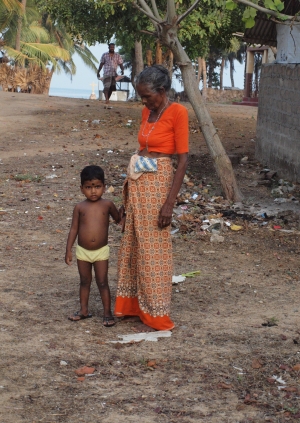 Today, back on their land, with a certain stability brought to their lives and no direct physical threat, former internally displaced persons (IDPs) and survivors of the war are able to make sense of the past. The survival mechanism that had prevented displaced Tamils from meaningful reflection on their experience at the peak of the war has given way to depression as they have no choice but to face the memories of traumatic events – the loss of family, of limbs, of their previous life.
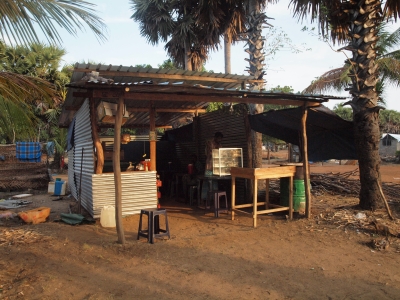 Such a mindset has repercussions on almost every aspect of daily life. At Jaffna University, formerly one of the most prestigious universities in South Asia, the 6,000 students were all affected by the war. Many have been disabled, traumatised, displaced. They lost family members, husbands and friends.
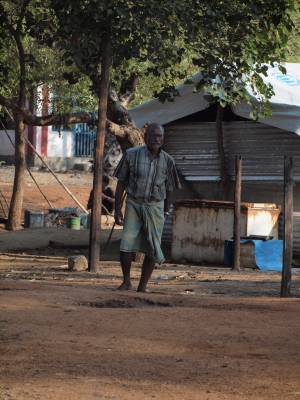 The impression of being relegated to second class citizens, added to uncertainty about their future, reinforces the Tamil community’s despair brought by the trauma of the past year.
Young Tamils in Sri Lanka 'being held without charge', 16 September:
''A retired senior diplomat in Sri Lanka says several thousand young people of the Tamil ethnic minority are being held in custody without any charges being brought against them. Nanda Godage said some had been incarcerated in this way for years.''
Submission before Lessons Learnt & Reconciliation Committee (LLRC) by Chandra Jayaratne, 23 September 2010:
There is no justice in the world. Now it is proved, even if you kill 100,000 people in a day, never mind if you are supporting me, I will defend you. This is the way the countries voted in favour of Srilanka in the UN security council for killing the terrorist as a whole. The reality on the ground is 40,000 Tamil civilians were shelled to death.
2)UN's Human Rights Chief is critical of Lankan government Human rights records.
3)US human rights report accused Lankan rulers for the Human Rights violations.
For your reference i am attaching the supporting evidences for war crimes and Genocide
Chemical Bomb
www.uktamilnews.com/?p=13034
http://www.nowpublic.com/world/sri-lankan-army-used-chemical-weapons-tamils-war-zones
http://www.stoptamilsgenocide.org/?p=151
Rape of Tamil Women: Sri Lankan Army's Weapon of War
http://www.nowpublic.com/world/rape-tamil-women-sri-lankan-armys-weapon-war
http://www.blackjuly83.com/EventsofBlackJuly.htm
Sri Lanka video 'appears authentic' By Jonathan Miller - Channel 4 News
http://www.channel4.com/news/articles/world/asia_pacific/sri+lanka+video+aposappears+authenticapos/3491637
http://www.channel4.com/news/articles/world/asia_pacific/sri+lanka+video+un+considers+violations/3493047
Sri Lanka execution video 'Not Fake'
http://www.channel4.com/news/articles/politics/international_politics/sri+lanka+execution+video+aposnot+fakeapos/3464152
The oppressed have no representation at intergovernmental bodies like the UN and the Commonwealth and these bodies are platforms for oppressive regimes to gang up and prevent the bodies serving justice to the oppressed.
More and more journalists like you would help bring the truth out.
Tamils are glad you have come out of Sri Lanka safely to publish this article.
Nina, please tell HRW, AI and ICG all what you saw and heard in Sri Lanka.
International community should not ignore the warning signs of genocide of Tamils which is occurring in Sri Lanka by the state terror.
Sri Lanka is ruled by Mr. Rajapaksha and his brothers {Rajapaksha &co.] Most of the ministry is under the President and his brothers. There will be no accountability, transparency or any form of finding the truth is impossible. Sri Lanka is to face War Crimes Investigation. Links below gives more information:
Kumarathasan Rasingam, Canada.
http://www.channel4.com/news/articles/politics/international_politics/sri+lanka+option/3652687
http://www.amnesty.org.uk/news_details.asp?NewsID=18760
http://www.hrw.org/en/news-filter/164
http://www.amnesty.org/en/region/sri-lanka
http://www.crisisgroup.org/en/regions/asia/south-asia/sri-lanka.aspx
http://www.abc. net.au/news/ stories/2010/ 05/19/2903429. htm?section= world
http://www.hrw.org/en/news/2010/05/20/sri-lanka-new-evidence-wartime-abuses
http://thelede.blogs.nytimes.com/2010/05/19/new-accusations-of-war-crimes-in-sri-lanka/?ref=asia
http://www.smh.com.au/opinion/politics/sri-lankas-bitter-peace-one-year-on-20100520-vlic.html
http://www.crisisgroup.org/en/regions/asia/south-asia/sri-lanka/191-war-crimes-in-sri-lanka.aspx
http://www.channel4.com/news/articles/politics/international_politics/sri+lanka+option/3652687
http://www.crisisgroup.org/en/regions/asia/south-asia/sri-lanka.aspx
Like any civilized nations, Sri Lanka should ask whether Tamils want to stay or leave, by holding a UN monitored referendum.
All the signs of live by the rules of that "victor" will lead into future violence will cause more deaths that this country can no longer take.
If the leaders cannot resolve, a third party solution must be imposed. Tamils and other minorities should join the people of the free world.