|
 By Camilla Canocchi By Camilla Canocchi
Thinking of fashion as a sustainable and ethical practice might seem like a paradox. Some may argue that the fast cycle of fashion invites consumers to discard last season’s clothing to purchase new must-have items. Others may think that for some labels stamping their goods as sustainable is just about following a trend that improves their reputation.
But sustainable fashion is on the rise and has a promising future.
In fact, according to the latest research by Mintel, a leading market research company, sales of ethical clothing in Britain have more than quadrupled in the last five years to reach £175 million in 2009. The eco-sustainable fashion market is just a little larger than the UK market for bridalwear, but the potential for ethical clothing is endless according to Mintel.
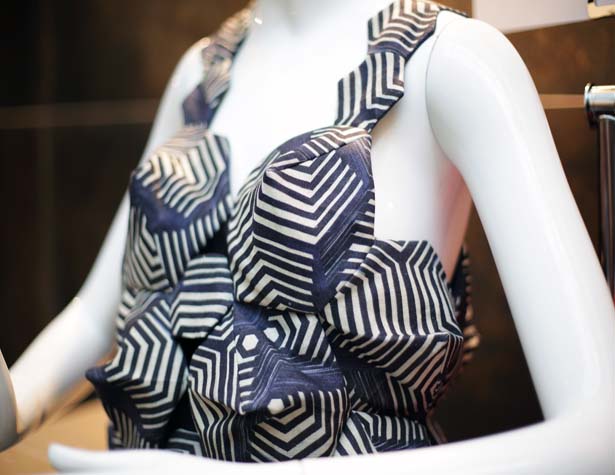
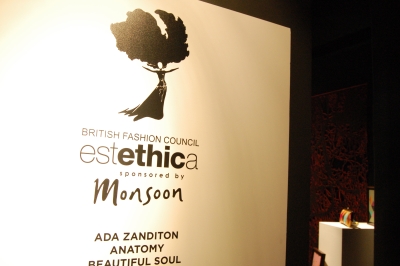
A leading institution in eco-sustainable fashion is estethica - the sustainable initiative of London Fashion Week, which just took place at Somerset House from 19-23 February. estethica was founded in 2006 by the British Fashion Council and it has been growing ever since: from 13 designers, this year 28 designers were showcasing their eco-sustainable collections.
“By opening the doors of a high-end, edgy fashion fair such as London Fashion Week to sustainable designers, we have given them unprecedented exposure,” says Orsola de Castro, co-founder of estethica.
“Over the last 30 years the whole fashion industry has gone mad, but I think that sustainable fashion represents a new ‘industrial revolution’,” adds de Castro who, with Filippo Tucci, co-owns the pioneering sustainable label From Somewhere.
estethica’s role is to promote sustainable designers and allow them to be competitive in the mainstream market, not only in terms of design, but also in terms of production and distribution. “We are looking at how to restructure the whole industry. We know that it has to change in this direction, we just don’t know exactly how yet,” says de Castro.
The creations of estethica’s designers adhere to at least one of the three estethica principles of fair trade, ethical practices and organic and recycled materials. This year a one to one mentoring programme was introduced for six selected designers who have been advised by three industry professionals on how to better develop their brand. High-end shoe label Nina Dolcetti, whose shoes are made of off-cuts, unwanted pre-consumer waste and ethically sourced vegetable tanned leathers, is one of the winners of the programme.
“I think it’s impossible to be 100 per cent sustainable,” explains Nina Dolcetti's head designer Elisalex Grunfeld de Castro. “If I had to look at where the leather I collect is coming from, there wouldn’t be any space left for creativity. The important thing is that I am not creating new demand for material."
 Walking around estethica’s exhibition, the feeling is that sustainable fashion is possible when it comes to small labels; behind those are people who invest with creativity and commitment in a market with both ethical principles and a potentially lucrative economic outcome. Walking around estethica’s exhibition, the feeling is that sustainable fashion is possible when it comes to small labels; behind those are people who invest with creativity and commitment in a market with both ethical principles and a potentially lucrative economic outcome.
On the other hand, consumers still seem to be sceptical. According to the 2008 Ethical Clothing Report from TNS Worldpanel Fashion, more than half of consumers in Britain are sceptical of the ethical claims of certain retailers and manufacturers, and two thirds think that retailers should use ethical practices across all their ranges, not just those marked as “ethical”.
Orsola de Castro thinks there has been a change in consumers’ attitudes, but there’s still some way to go, with 35 per cent of Brits having no interest in ethical fashion according to Mintel's research. “We want to reach the point when instead of buying twenty t-shirts in H&M, people will only buy four,” de Castro explains. “We have forgotten to love our clothes, we buy a lot of them for two pounds. If people want to renew their wardrobe every six months, they should be free to do it - we should remember that high street fashion is very democratic and this should not change. But the point is that I don’t want to buy if I know that I am hurting a family in India.”
High street fashion retailers have embraced the eco-sustainable trend by launching some sustainable collections. They have also played a main role in the transformation of clothing in the fast food of fashion. estethica’s main sponsor is high street fashion retailer Monsoon, which is also a founder member of the Ethical Trading Initiative.
“I don’t believe in an extremist policy, that if you are not perfect I don’t want you,” says de Castro. “High street retailers are in part responsible for the fashion industry’s current state. This is why they are now trying to improve. From Asos’ organic cotton T-shirts to Tesco’s collections, there are good signs of recovery in the industry.”
Labour Behind The Label – a campaign that supports garment workers' efforts worldwide to improve their working conditions – has highlighted Monsoon as a high street retailer that “can offer concrete examples of steps to develop and implement a living wage methodology in the supplier base, with clear plans to move beyond pilot projects.”
Labour Behind The Label’s 2009 report Let’s Clean Up Fashion: the state of pay behind the UK high street stated: “Monsoon’s project shows a clear engagement with the difficult issues around delivering a living wage to workers and covers all the four areas of a good living wage project. It is great to see worker involvement built into processes and a strategy being developed to support freedom of association.” On the other hand, the report indicates there is still much to do and that there are many high street retailers, such as Clarks, French Connection and River Island, that do not have any concrete plans to guarantee living wages to their workers.
It is clear that changes in the industry must go hand in hand with a change in consumer habits for sustainable fashion to have wider success. de Castro thinks that consumers need to go back to loving their clothes and this can be done by “creating a story behind each piece. When you buy a new dress you feel so wonderful. Well, it would be great to know that also the person who has made your dress has managed to pay for his son’s education.”
|

